On this page10
Friction saw blades for tube mills and steel sections, made to your size or drawing. TFI Co. has made steel blades since 1965. We make toothed and toothless friction blades from Ø80 to 1,200 mm, for buyers who order 50 to 5,000+ pcs.
- Type
- Toothed or toothless
- Diameter
- Ø80–1,200 mm
- Made
- To your size, drawing or old blade
- Used on
- Tube and pipe mills, steel section lines
- Quantity bands
- 50–199 · 200–999 · 1,000–5,000 · 5,000+ pcs
- Price
- On request, per quantity band
- Type
- Toothed or toothless
- Diameter
- Ø80–1,200 mm
- Made
- To your size, drawing or old blade
- Used on
- Tube and pipe mills, steel section lines
- Quantity bands
- 50–199 · 200–999 · 1,000–5,000 · 5,000+ pcs
- Price
- On request, per quantity band
Heat does the cutting, not the teeth
A friction blade turns very fast. Its rim often moves at 90 to 140 m/s, depending on the machine. A cold saw blade moves at about 2 to 3 m/s.
At this speed, the rubbing at the rim heats a narrow band of steel until it is soft. The teeth then push the soft steel out of the cut. Each point of the rim touches the work only for a moment, so the blade stays much cooler than the cut.
Your machine manual sets the maximum blade speed and the cooling method. Follow it, because saw makers set different limits.
Friction, cold or hot saw: which blade does what
How it cuts
- Friction blade
- Heat softens the steel
- Cold saw blade (HSS)
- Teeth cut chips
- Hot saw blade
- Cuts red-hot steel
Steel temperature
- Friction blade
- Cold steel
- Cold saw blade (HSS)
- Cold steel
- Hot saw blade
- Above about 750 °C
Rim speed
- Friction blade
- About 90–140 m/s
- Cold saw blade (HSS)
- About 2–3 m/s
- Hot saw blade
- —
Cut end
- Friction blade
- Burr on both edges
- Cold saw blade (HSS)
- Clean, small burr
- Hot saw blade
- —
Typical use
- Friction blade
- Tube-mill cut-off, steel sections
- Cold saw blade (HSS)
- Cut-to-length, fabrication
- Hot saw blade
- Rolling mills: billets, rails, beams
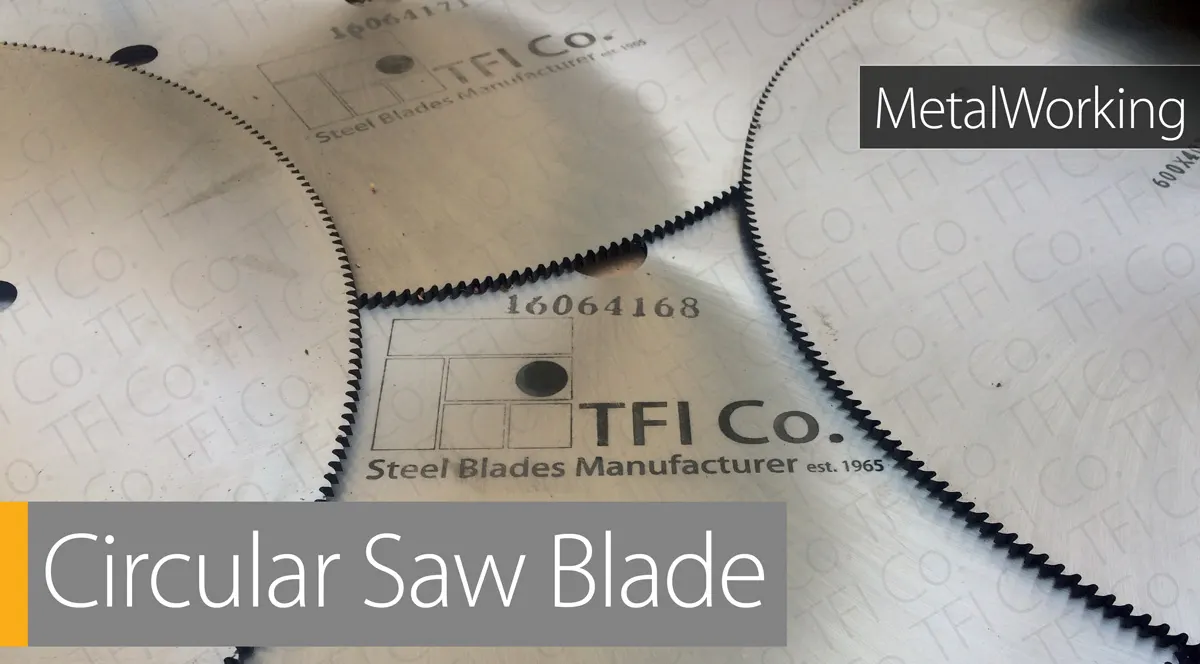
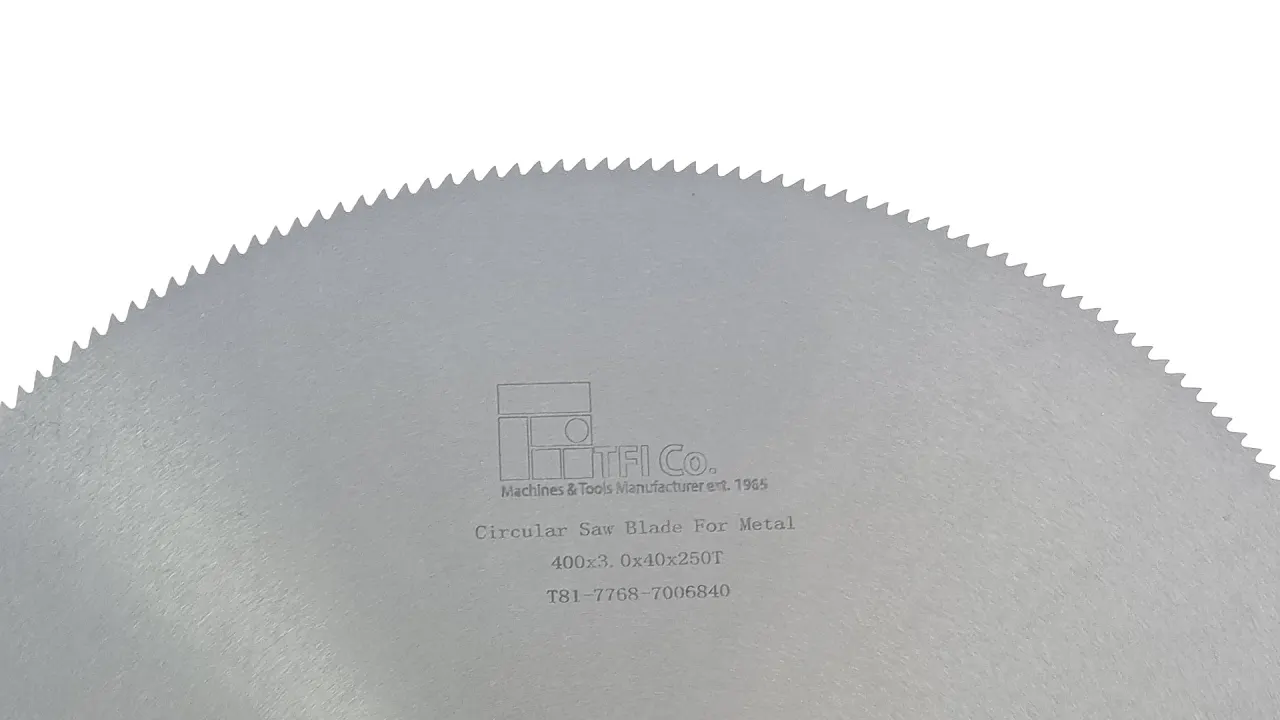
A real TFI friction blade: Ø400 × 3.0 × 40 mm
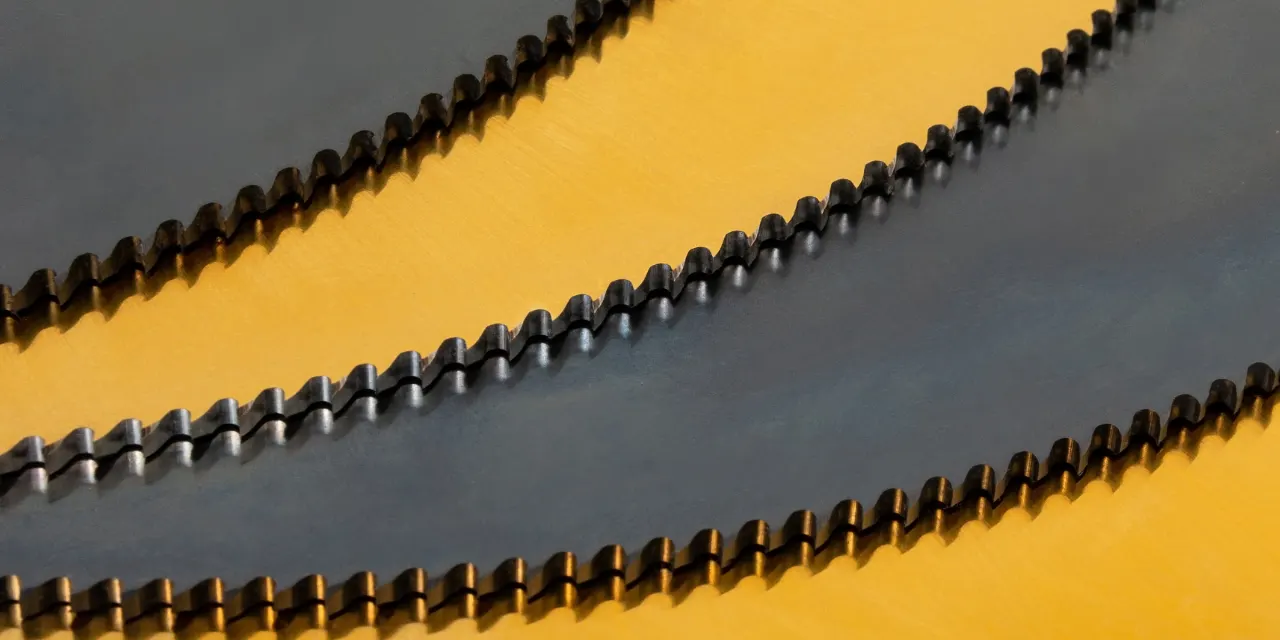
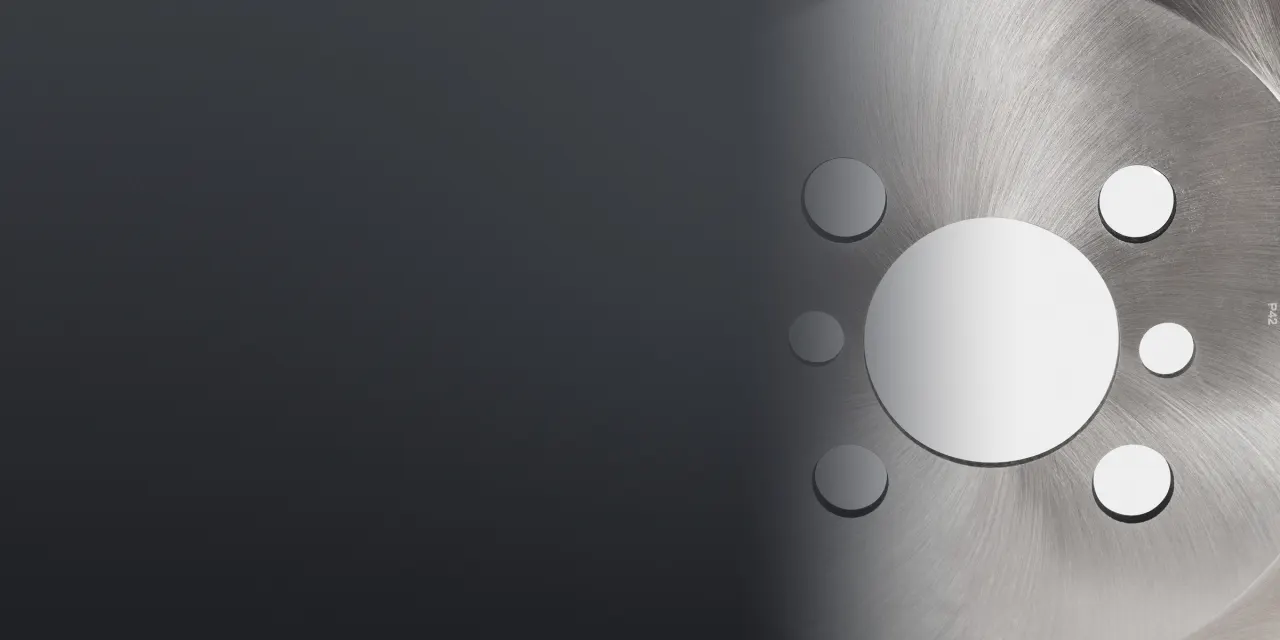
The photos below show one friction blade from our range. The marking on the blade reads 400x3.0x40x250T.
- Diameter
- 400 mm
- Thickness
- 3.0 mm
- Bore
- 40 mm
- Teeth
- 250, a pitch of about 5 mm
- Drive holes
- 6 pin holes around the bore
- Diameter
- 400 mm
- Thickness
- 3.0 mm
- Bore
- 40 mm
- Teeth
- 250, a pitch of about 5 mm
- Drive holes
- 6 pin holes around the bore
A TFI friction blade, Ø400 × 3.0 × 40 mm
Our own photos of one blade from our range.
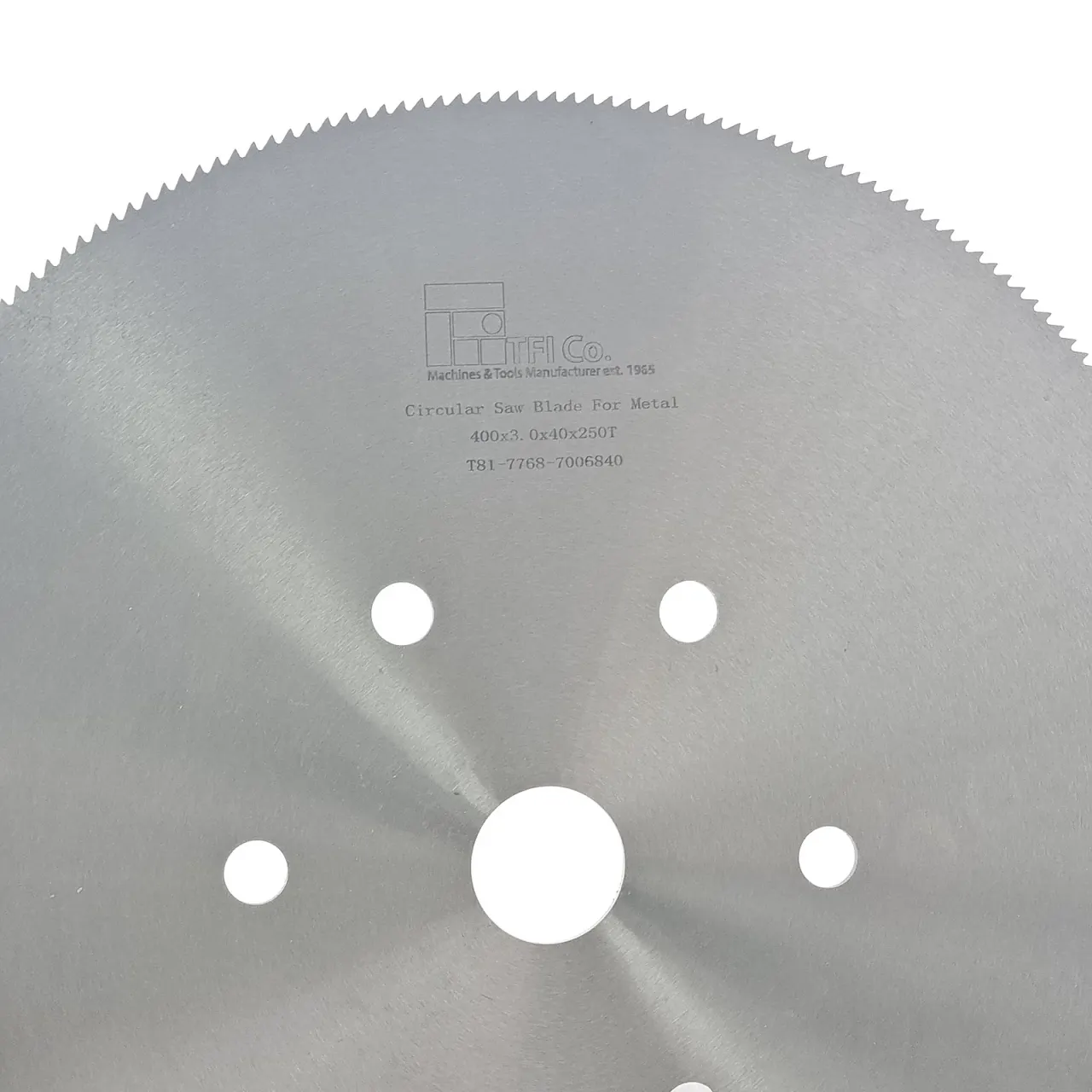
Ø400 × 3.0 × 40 mm, 250 teeth 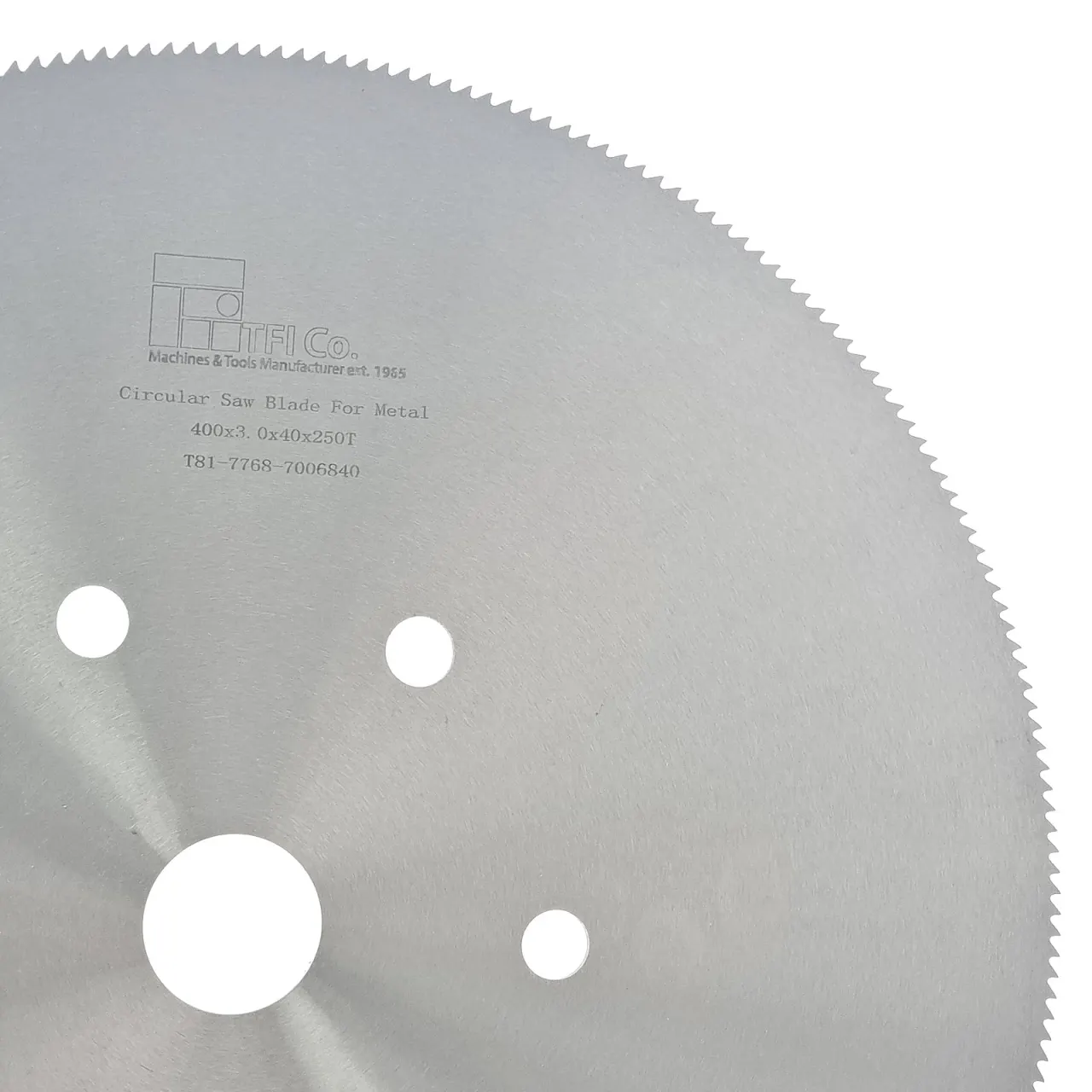
40 mm bore and six pin holes 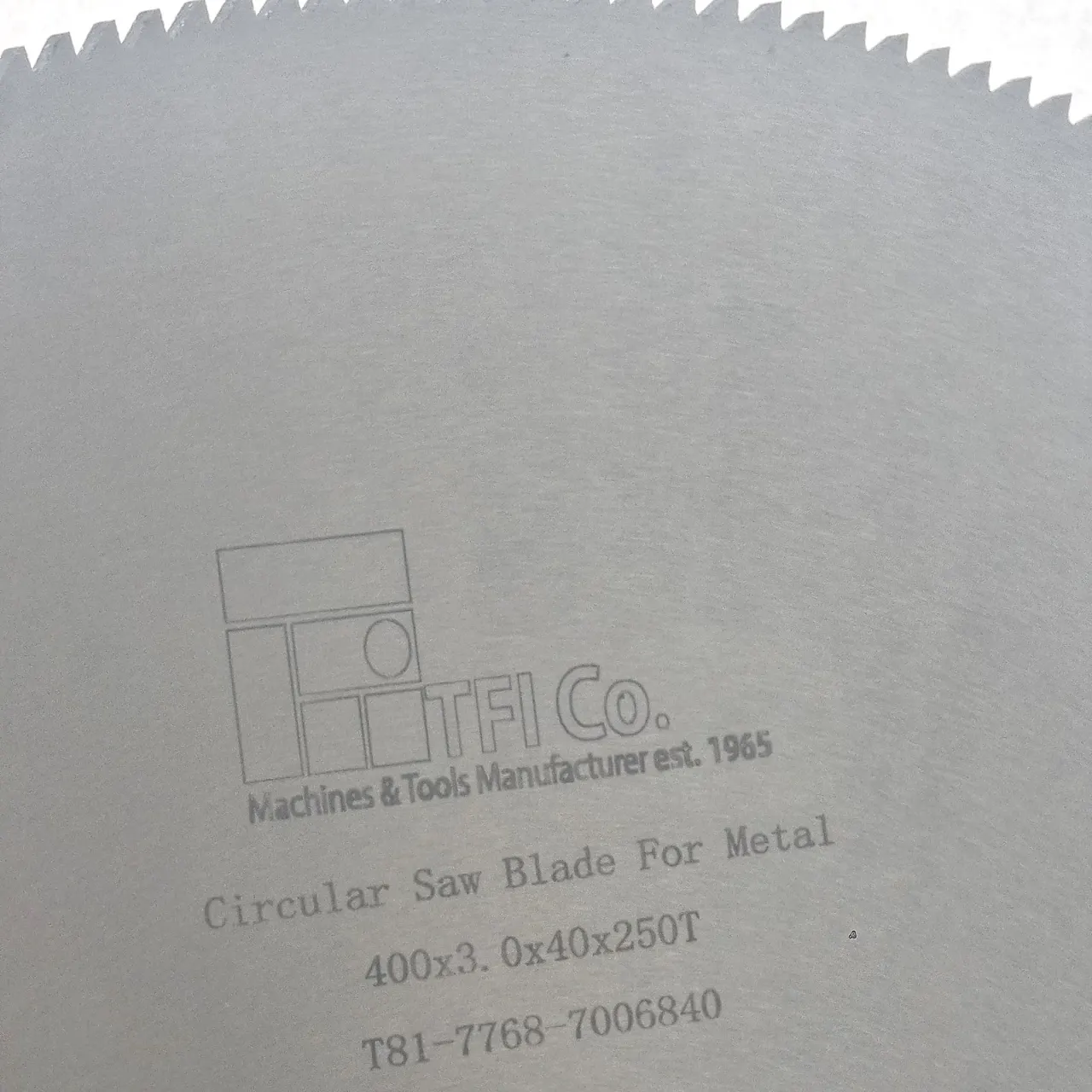
Fine teeth, about 5 mm pitch 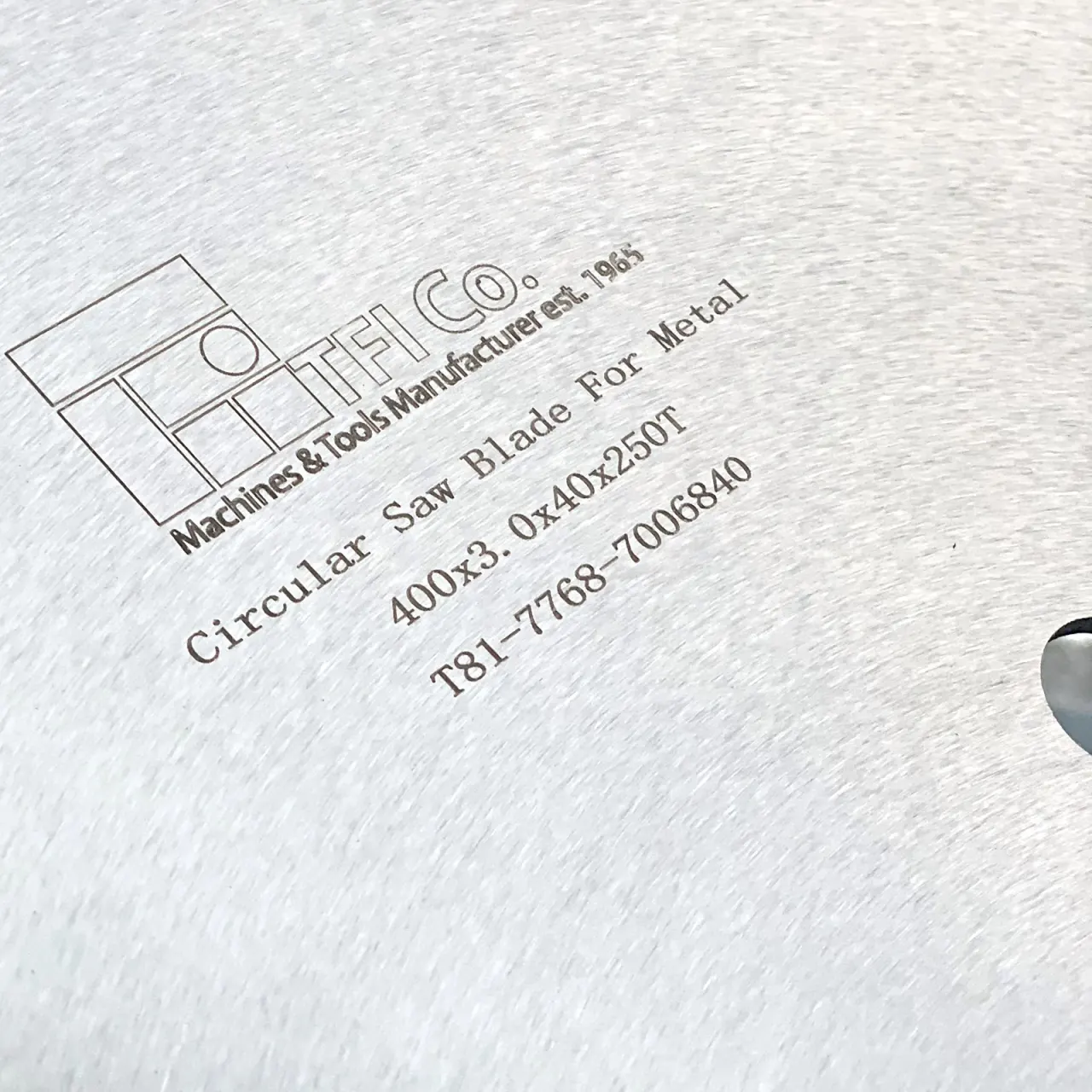
Size marked on the blade
Ø400 × 3.0 × 40 mm, 250 teeth 40 mm bore and six pin holes Fine teeth, about 5 mm pitch Size marked on the blade
A pitch of about 5 mm suits thin-wall tube. Thicker walls usually take a coarser pitch. Your blade does not need to match this one: we make the size, teeth and holes to your drawing.
Toothed or toothless
Toothed blades
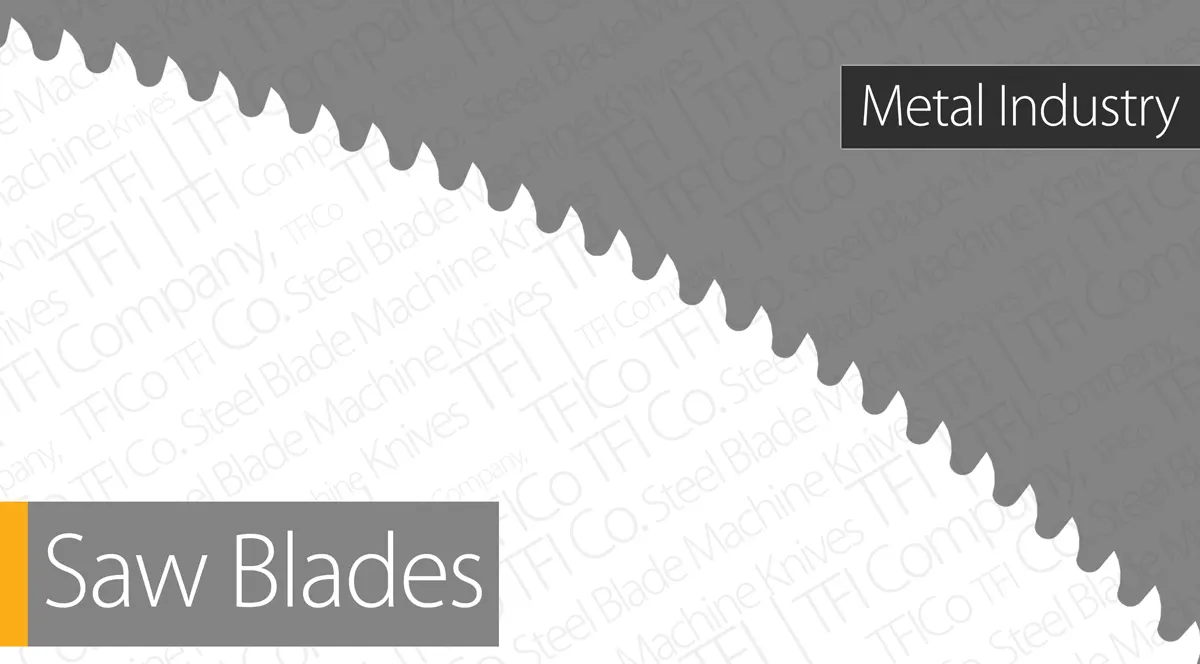
Fine teeth, often with a pitch of 5 to 8 mm. Most tube-mill friction saws run toothed blades.
Toothless blades
A plain rim, for machines and cuts that are set up for one. Send the old blade or the drawing, and we match it.
Toothed blades
Fine teeth, often with a pitch of 5 to 8 mm. Most tube-mill friction saws run toothed blades.
Toothless blades
A plain rim, for machines and cuts that are set up for one. Send the old blade or the drawing, and we match it.
How to choose the blade
Wall thickness
Thin walls need a fine pitch, so that several teeth are in the wall. Thick walls take a coarser pitch.
Machine and speed
The saw make, model and blade rpm decide the diameter, bore, holes and speed limit.
Side profile
Friction blades are often hollow-ground or taper-ground, so the sides do not rub in the cut.
Steel and hardness
Alloyed steels such as 80CrV2 (1.2235) and 75Cr1 are common for friction blades. Tell us the grade you use now, and how the old blade wore.
When a friction blade is the wrong choice
Solid bar
Friction saws are made for tube and open sections. For solid bar, a cold saw is usually the better choice.
Burr-free ends
A friction cut leaves a burr on both edges. If the ends must be clean, use a cold saw blade for metal.
Noise and sparks
Friction sawing is loud and throws sparks. Follow your machine maker’s rules for guards and hearing protection.
Send these details
Size
Diameter × thickness × bore, in mm
Holes
Number, size and pitch circle of the pin holes
Rim
Toothed or toothless, and the tooth pitch or form
Machine
Saw make, model and blade rpm
Tube
Outside size, wall thickness and steel grade
Quantity
Your band, and one-off or repeat order
Size
Diameter × thickness × bore, in mm
Holes
Number, size and pitch circle of the pin holes
Rim
Toothed or toothless, and the tooth pitch or form
Machine
Saw make, model and blade rpm
Tube
Outside size, wall thickness and steel grade
Quantity
Your band, and one-off or repeat order
No drawing? A photo of the old blade with a ruler beside it is a good start.
Regrinding in selected regions
We regrind friction saw blades in selected regions only. Contact us with your country and the blade size, and we will tell you if we can regrind your blades.
How a bulk order works
You send
the blade size, toothed or toothless, what you cut and your quantity band.
Our team checks
the size, tooth pitch and drive holes, and asks if anything is missing.
You receive a written quotation
for your quantity band.
You approve
the drawing and the quotation, and production starts.
You send
the blade size, toothed or toothless, what you cut and your quantity band.
Our team checks
the size, tooth pitch and drive holes, and asks if anything is missing.
You receive a written quotation
for your quantity band.
You approve
the drawing and the quotation, and production starts.
For repeat orders, we keep your drawing on file, so every batch is made the same way.
Where it is used
- Welded tube and pipe mills
- Steel section and profile makers
- Saw blade distributors and tool shops
- Welded tube and pipe mills
- Steel section and profile makers
- Saw blade distributors and tool shops
Do you make toothless friction blades?
Yes. We make toothed and toothless friction blades. Send the drawing, the old blade or a photo of it with a ruler beside it.
Can you match my old blade?
Yes. We make friction blades to your size, drawing or old blade, from Ø80 to 1,200 mm.
Do you regrind friction blades?
In selected regions only. Contact us with your country and the blade size, and we will tell you.
What is the smallest order?
These pages are for bulk orders from 50 pcs. If you need fewer, say so in the form and our team will tell you what is possible.
- Section
- Saw Blades: Carbide and Wood
- Reading time
- 4 min read
Ready to order in volume?
Orders from 50 to 5,000+ pieces. Send your size or drawing and the quantity, and our team replies with a quotation.
Request a volume quote