On this page8
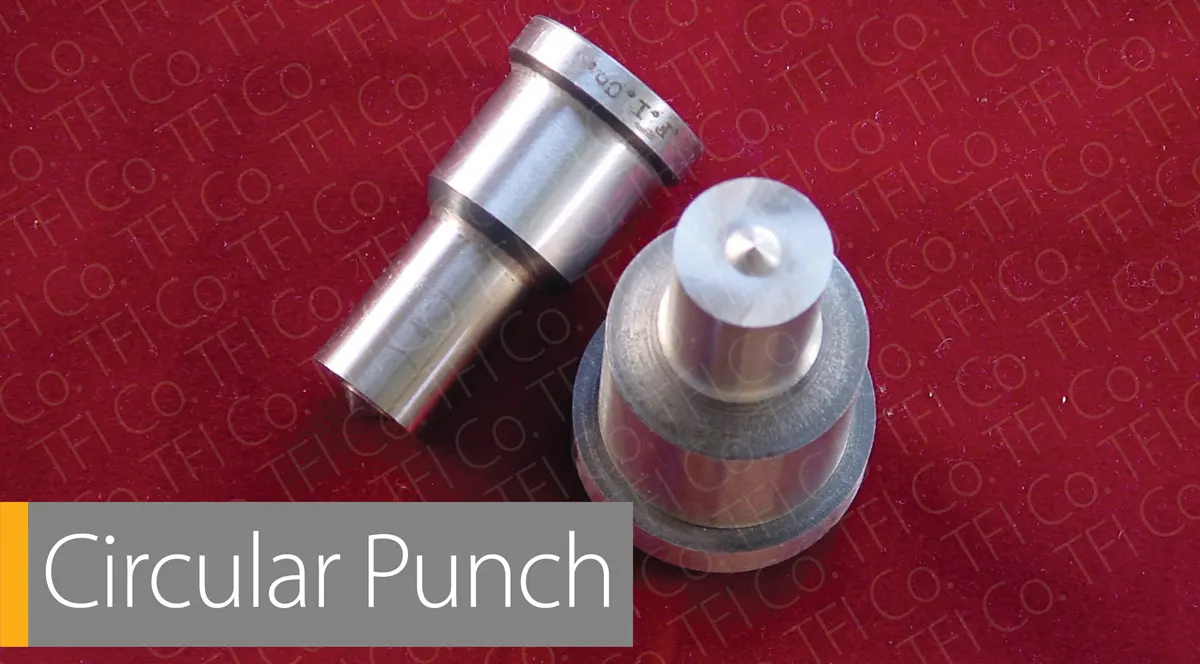
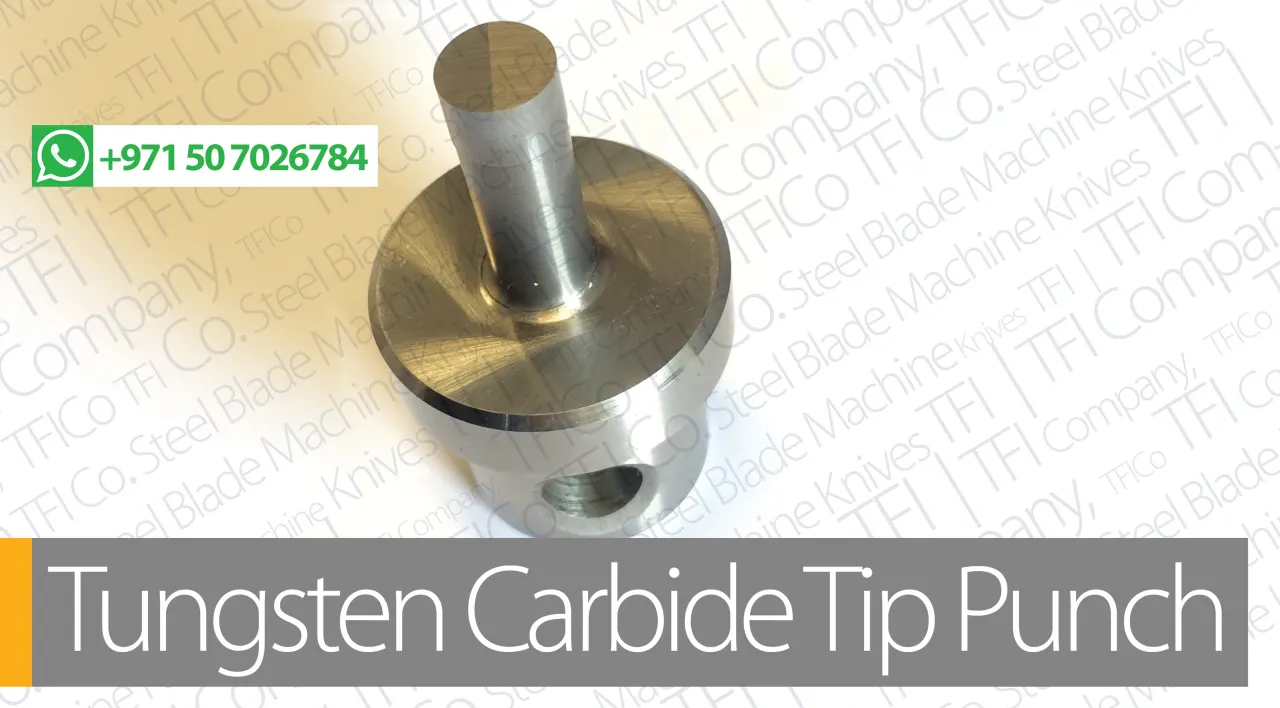
Punches with a tungsten carbide (TC) tip, for long runs. TFI Co. has made steel tools since 1965. A TC tip keeps its cutting edge much longer than steel on abrasive material. We supply stamping plants, fabricators and distributors who order 50 to 5,000+ pcs.
- Build
- Tungsten carbide cutting tip on a tough steel body
- Best for
- Long runs, abrasive or coated material, electrical steel
- Not for
- Heavy shock, thick plate, poor punch–die alignment
- Made
- To your drawing, sample or holder size
- Quantity bands
- 50–199 · 200–999 · 1,000–5,000 · 5,000+ pcs
- Price
- On request, per quantity band
Why carbide lasts longer
Tungsten carbide is much harder than tool steel. It resists the wear that dulls a steel punch, so the edge stays sharp for many more hits. This means fewer regrinds, fewer machine stops and a more even burr over the whole run. On long series, this often pays for the higher tool price.
The trade-off: hardness vs toughness
Carbide is hard but brittle. It does not like shock or side load. A carbide punch needs good alignment between punch and die, a rigid press and the right clearance. For thick plate or heavy shock, a tough tool-steel punch is often the better choice.
Is carbide right for your job?
Yes, if
You run long series, the material is abrasive (silicon/electrical steel, coated sheet), and your press and tooling are well aligned.
Maybe, if
You punch stainless steel or thin high-strength steel; test a small batch first.
No, if
The punch takes heavy shocks, or the material is thick compared with the hole size.
Care and regrinding
Regrind only with a diamond wheel and coolant.
Never hit the tip with a hammer or drop it on a hard floor.
Check alignment when you fit the punch; a small side load can chip the tip.
Regrind only with a diamond wheel and coolant.
Never hit the tip with a hammer or drop it on a hard floor.
Check alignment when you fit the punch; a small side load can chip the tip.
Test, then order in bulk
Start with the smallest band, 50–199 pcs, on one job. Count the hits between regrinds, and compare with your steel punches. If the numbers are better, order the next band with the same drawing.
Send these details for your bulk quotation
Punch shape and size, and the overall length
Die size and clearance, or the material and thickness
Press type and holder or station size
Number of hits per run or per year
Quantity band, and one-off or repeat order
Punch shape and size, and the overall length
Die size and clearance, or the material and thickness
Press type and holder or station size
Number of hits per run or per year
Quantity band, and one-off or repeat order
No drawing? A phone photo of the punch you use now, with a ruler beside it, is enough to start.
How a bulk order works
You send
the machine, the tool sizes or drawing, and your quantity band.
Our team checks
the shape, length, holder fit and carbide grade, and asks if anything is missing.
You receive a written quotation
for your quantity band.
You approve
the drawing and the quotation, and production starts.
You send
the machine, the tool sizes or drawing, and your quantity band.
Our team checks
the shape, length, holder fit and carbide grade, and asks if anything is missing.
You receive a written quotation
for your quantity band.
You approve
the drawing and the quotation, and production starts.
For repeat orders, we keep your drawings on file, so every batch fits the same holders.
Who uses carbide-tipped punches
Stamping plants on long runs
Electrical steel and motor lamination makers
Makers of coated and pre-painted sheet parts
Tool dealers and distributors
Stamping plants on long runs
Electrical steel and motor lamination makers
Makers of coated and pre-painted sheet parts
Tool dealers and distributors
How much longer does a carbide punch last?
It depends on the material, the press and the alignment, so we do not promise a number. A trial batch shows the result on your own line.
Can I regrind a carbide punch on a normal wheel?
No. Use a diamond wheel with coolant.
What is the smallest order?
These pages are for bulk orders from 50 pcs. If you need fewer, say so in the form and our team will tell you what is possible.
How is the price set?
The price depends on the size, shape, steel and quantity band. You receive a written quotation before you order.
- Section
- Press Brake and Punching Tools
- Updated
- 19 November 2026
- Reading time
- 3 min read
Ready to order in volume?
Orders from 50 to 5,000+ pieces. Send your size or drawing and the quantity, and our team replies with a quotation.
Request a volume quote