On this page7
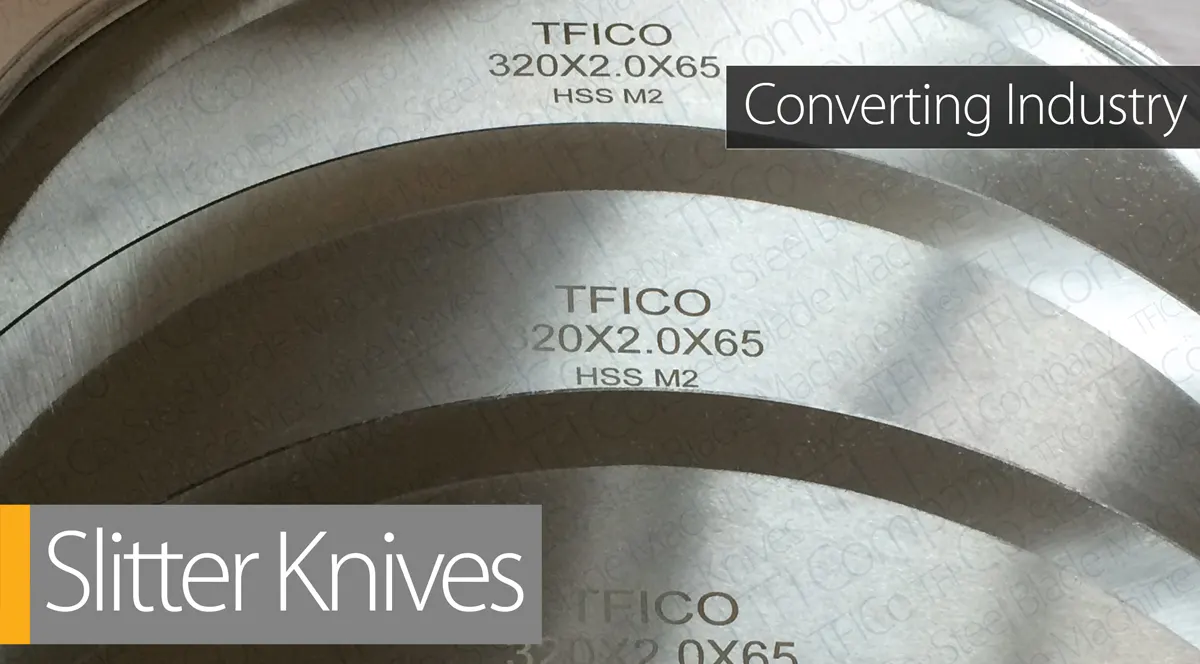
Slitter knives for paper, film, foil and packaging converting lines. TFI Co. has made steel blades since 1965. We make dish slitter knives and their counter blades, plus cut-off and serrated knives, for converters and distributors who order 50 to 5,000+ pcs.
- Knife types
- Dish (concave) slitter knives, counter blades, cut-off and serrated knives
- Materials cut
- Paper, A4 sheets, board, film, aluminium foil, food and sugar or grain packaging
- Example sizes
- Ø62 to Ø140 mm dish knives with a 60° bevel
- Made
- To your drawing, to a sample, or from your machine model
- Quantity bands
- 50–199 · 200–999 · 1,000–5,000 · 5,000+ pcs
- Price
- On request, per quantity band
Three ways to slit a web
Shear cut
a dish knife cuts against a counter blade or bottom knife, like scissors. Clean edges on paper, board and many films.
Razor cut
a thin blade cuts the web in the air or in a grooved roll. Good for thin films.
Crush cut
a round-edged knife presses the web against a hard roll. Simple, used for some non-wovens and tapes.
This page is about shear-cut knives. Tell us the method your line uses.
Dish knife and counter blade: a pair
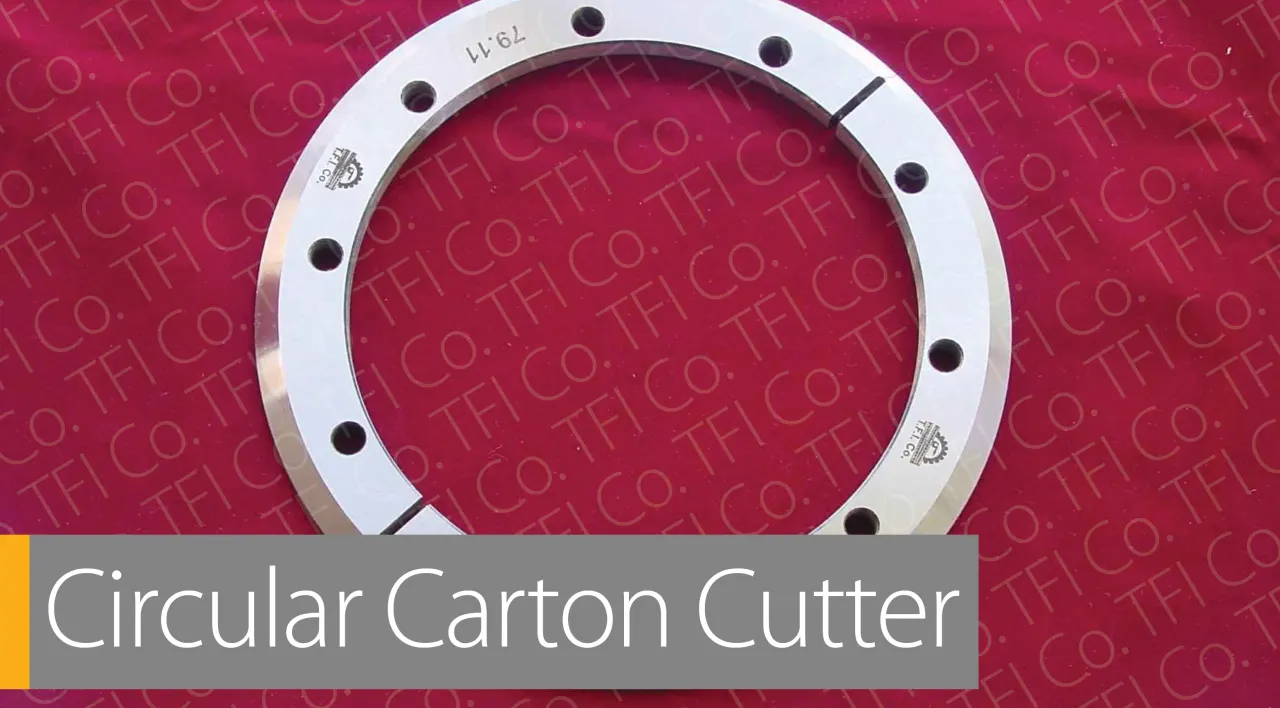
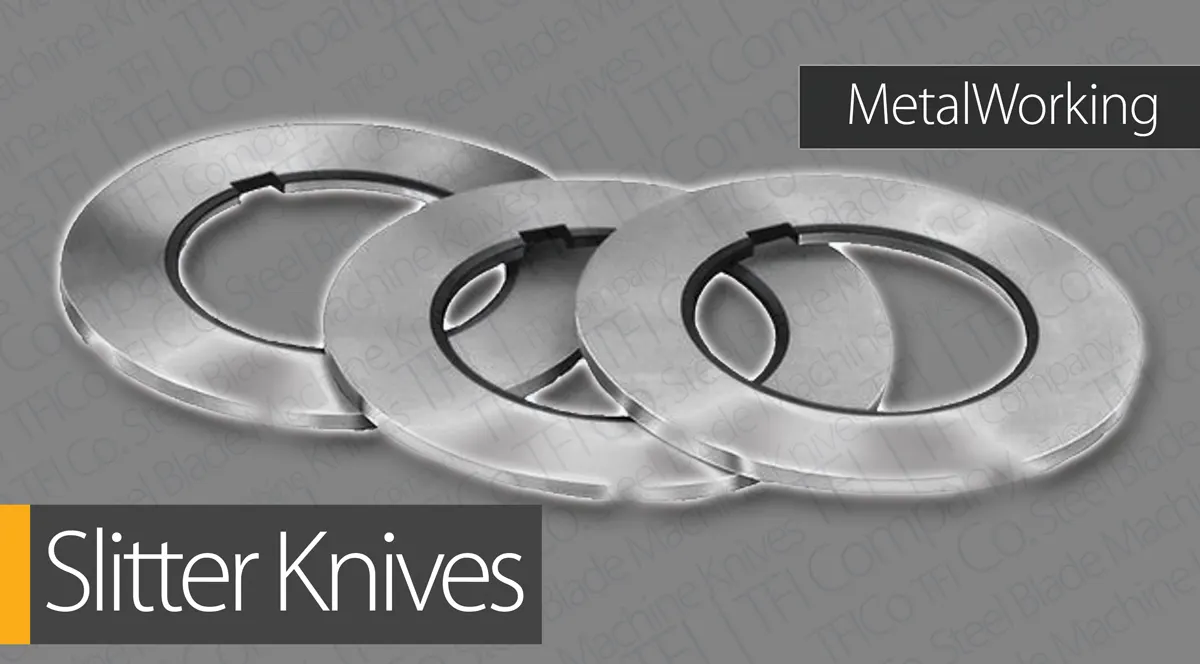
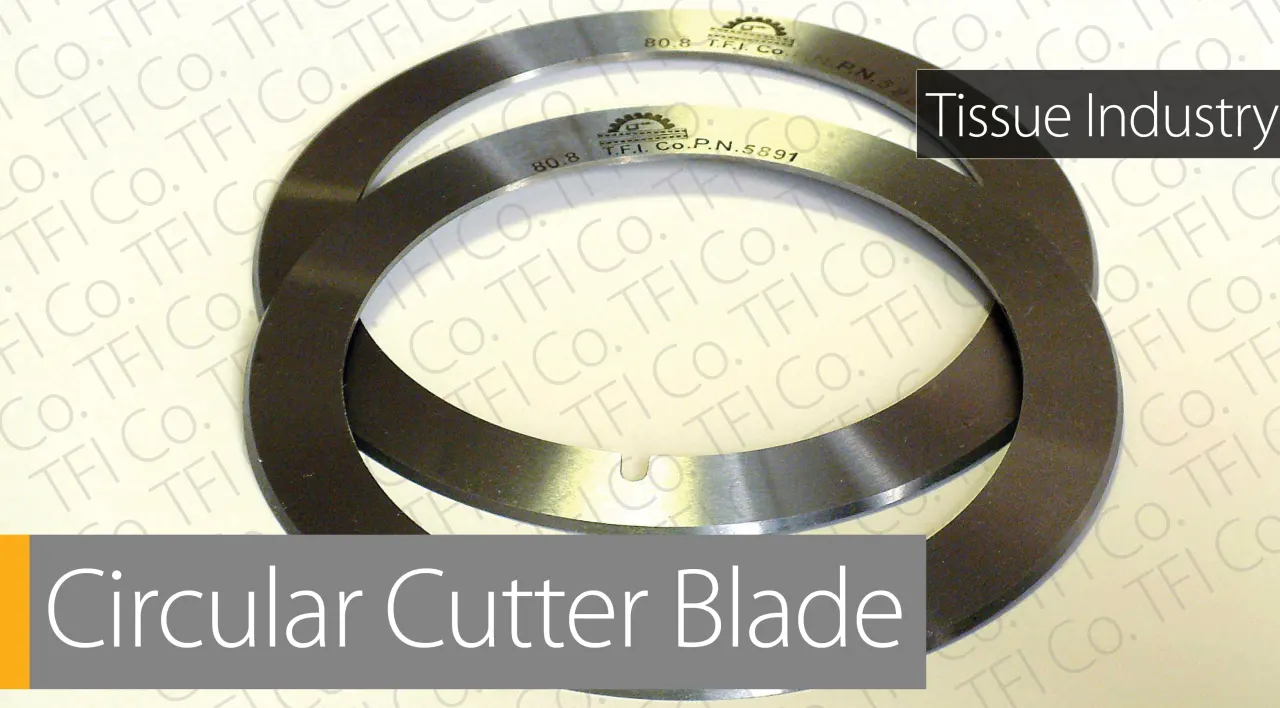
The dish knife is the top knife. Its concave shape gives a small contact point and a clean cut. It works against a counter blade on the bottom roller. TFI Co. makes both parts. Order them together, so the edge angles and sizes match.
Dish knives TFI Co. has made
62 × 40 × 0.64 mm
- Bevel
- 60°
- Typical job
- Thin, light materials on fast lines
65 × 40 × 1 mm
- Bevel
- 60°
- Typical job
- Compact, high-speed slitting
105 × 65 × 1.2 mm
- Bevel
- 60°
- Typical job
- General converting
130 × 80 × 1.5 mm
- Bevel
- 60°
- Typical job
- Paper, board and film
130 × 100 × 1.5 mm
- Bevel
- 60°
- Typical job
- Paper, board and film
140 × 70 × 3 mm
- Bevel
- 60°
- Typical job
- Heavy-duty, long runs
Thin knives like Ø62 × 0.64 mm cut light materials with very low force. Thick knives like Ø140 × 3 mm stay stable on heavy, long runs.
Signs your knives need attention
Dust or fibres at the cut edge
Rough or wavy edges on the slit rolls
Film that stretches or tears at the cut
More noise or heat at the knife holder
Dust or fibres at the cut edge
Rough or wavy edges on the slit rolls
Film that stretches or tears at the cut
More noise or heat at the knife holder
Send these details for your bulk quotation
Outside diameter × bore × thickness (mm), and the bevel angle
Dish knife, counter blade, or both
The material you slit, and its thickness
Machine make and model, and the number of knife positions
Quantity band, and one-off or repeat order
Outside diameter × bore × thickness (mm), and the bevel angle
Dish knife, counter blade, or both
The material you slit, and its thickness
Machine make and model, and the number of knife positions
Quantity band, and one-off or repeat order
No drawing? A phone photo of the knife you use now, with a ruler across the diameter and the bore, is enough to start.
How a bulk order works
You send
the sizes, drawing or machine model, and your quantity band.
Our team checks
the diameter, bore, thickness, bevel and steel, and asks if anything is missing.
You receive a written quotation
for your quantity band.
You approve
the drawing and the quotation, and production starts.
You send
the sizes, drawing or machine model, and your quantity band.
Our team checks
the diameter, bore, thickness, bevel and steel, and asks if anything is missing.
You receive a written quotation
for your quantity band.
You approve
the drawing and the quotation, and production starts.
For repeat orders, we keep your drawing on file, so the next batch is the same knife. We can also plan batches to match your yearly use.
Where converting slitter knives are used
Paper and board slitter-rewinders
Film and foil converting
Label, tape and packaging lines
Food packaging: wraps, sugar and grain packs
Distributors of converting spare parts
Paper and board slitter-rewinders
Film and foil converting
Label, tape and packaging lines
Food packaging: wraps, sugar and grain packs
Distributors of converting spare parts
Do you make the counter blade for my dish knife?
Yes. Send the sizes of both, or a photo of the knife holder and the bottom roller.
Which bevel angle do you make?
The examples above have a 60° bevel. We make other angles to your drawing.
What is the smallest order?
These pages are for bulk orders from 50 pcs. If you need fewer, say so in the form and our team will tell you what is possible.
How is the price set?
The price depends on the size, the steel and the quantity band. You receive a written quotation before you order.
- Section
- Slitter and Circular Knives
- Updated
- 19 November 2026
- Reading time
- 3 min read
Ready to order in volume?
Orders from 50 to 5,000+ pieces. Send your size or drawing and the quantity, and our team replies with a quotation.
Request a volume quote